- English
- Español
- Português
- русский
- Français
- 日本語
- Deutsch
- tiếng Việt
- Italiano
- Nederlands
- ภาษาไทย
- Polski
- 한국어
- Svenska
- magyar
- Malay
- বাংলা ভাষার
- Dansk
- Suomi
- हिन्दी
- Pilipino
- Türkçe
- Gaeilge
- العربية
- Indonesia
- Norsk
- تمل
- český
- ελληνικά
- український
- Javanese
- فارسی
- தமிழ்
- తెలుగు
- नेपाली
- Burmese
- български
- ລາວ
- Latine
- Қазақша
- Euskal
- Azərbaycan
- Slovenský jazyk
- Македонски
- Lietuvos
- Eesti Keel
- Română
- Slovenski
- मराठी
- Srpski језик

How Does a Dry Type Transformer Reduce Indoor Power Risks?
Article Summary: A Dry Type Transformer is often selected for factories, commercial buildings, data rooms, hospitals, schools, renewable energy systems, and other indoor or space-limited power projects because it avoids oil leakage concerns, supports safer installation environments, and reduces routine maintenance pressure. For buyers, the real challenge is not simply finding a transformer; it is choosing one that fits load demand, ventilation conditions, voltage requirements, safety expectations, installation space, and long-term operating costs. This article explains how a Dry Type Transformer helps solve practical purchasing pain points, what details should be checked before ordering, and how to compare options with greater confidence.
Table of Contents
- Article Outline
- Why Do Buyers Care About Dry Type Transformer Selection?
- What Pain Points Can a Dry Type Transformer Solve?
- How Does It Compare With Oil Immersed Options?
- What Should I Check Before Choosing a Dry Type Transformer?
- Where Is a Dry Type Transformer Commonly Used?
- How Can Quality Control Affect Long Term Performance?
- What Mistakes Should Buyers Avoid?
- FAQ About Dry Type Transformer Purchasing
- How Can I Request a Suitable Dry Type Transformer Solution?
Article Outline
- Understand the role of a Dry Type Transformer in safer indoor power distribution.
- Identify the main concerns of project buyers, engineers, and facility managers.
- Compare dry type and oil immersed transformer choices from a practical purchasing view.
- Review key selection factors, including capacity, voltage, insulation, temperature rise, enclosure, noise, and installation environment.
- Learn how Conso Electrical Science and Technology Co., Ltd. supports buyers with transformer manufacturing and project matching.
- Use the FAQ section to clarify common decision questions before sending an inquiry.
Why Do Buyers Care About Dry Type Transformer Selection?
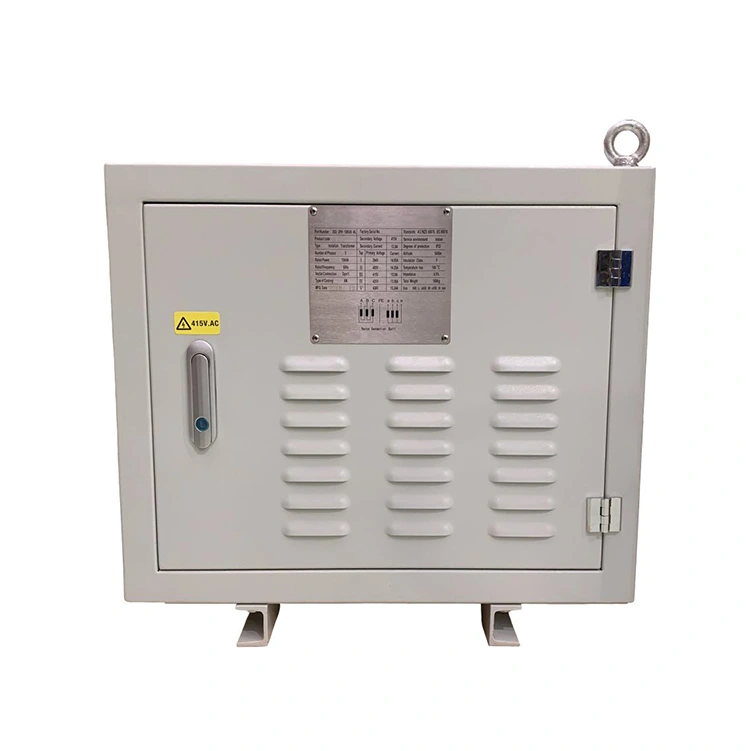
Choosing a Dry Type Transformer is rarely a simple catalog decision. In many projects, the transformer must work near people, production lines, control rooms, shopping areas, or sensitive electrical equipment. That means buyers are not only comparing price. They are also thinking about safety, heat dissipation, noise, floor space, maintenance, fire risk, delivery schedule, and whether the supplier can understand the actual working conditions.
For an industrial plant, an unstable transformer can interrupt production. For a commercial building, poor transformer selection can cause noise complaints, overheating, or unnecessary maintenance work. For a hospital, school, or data-related facility, electrical reliability becomes even more sensitive because the cost of downtime is much higher than the cost difference between two transformer quotations.
This is why many buyers look closely at a Dry Type Transformer when the project requires indoor installation, clean operation, and reduced oil-related risk. Instead of relying on insulating oil, this type of transformer uses solid insulation and air cooling. The design makes it suitable for many environments where oil leakage, oil containment, or additional fire protection measures would create extra work.
However, not every Dry Type Transformer is automatically suitable for every project. A good buying decision still depends on technical matching. The transformer must be selected according to rated capacity, input and output voltage, frequency, phase, insulation class, cooling method, ambient temperature, altitude, enclosure protection, installation position, and load characteristics. When these details are ignored, even a good product can perform poorly in the wrong application.
What Pain Points Can a Dry Type Transformer Solve?
Many buyers begin their search after experiencing one of three problems: limited installation space, strict safety requirements, or high maintenance pressure. A Dry Type Transformer can help address these issues when properly designed and installed.
- Oil leakage concern: Because there is no transformer oil tank, buyers can reduce worries about oil seepage, oil collection pits, and oil cleanup work.
- Indoor installation demand: Dry type units are commonly selected for indoor substations, basements, workshops, commercial buildings, and public facilities.
- Maintenance pressure: Without oil sampling, oil filtering, or oil level checking, daily maintenance can become more straightforward.
- Fire safety planning: In projects where fire load is a major concern, a Dry Type Transformer can be easier to integrate into the building’s electrical design.
- Space management: Many dry type designs are compact and suitable for installations where the transformer must be placed close to the load center.
- Cleaner working environment: Facilities that need cleaner operation often prefer equipment that does not rely on liquid insulation.
For buyers, these advantages are practical rather than decorative. They affect civil construction cost, installation planning, maintenance manpower, emergency response, and long-term risk control. A lower purchase price may look attractive at first, but if the transformer later requires more space, more protection, or more frequent service work, the total project cost may become less attractive.
Buyer’s note: A Dry Type Transformer should not be selected only because it is “dry.” It should be selected because its capacity, voltage, insulation system, cooling path, protection level, and installation requirements match the actual project.
How Does It Compare With Oil Immersed Options?
Oil immersed transformers are still widely used, especially in outdoor power distribution, utility projects, and applications where oil cooling is preferred. The point is not that one type is always better than the other. The better question is which transformer fits the site conditions, safety requirements, and operating expectations.
| Comparison Point | Dry Type Transformer | Oil Immersed Transformer |
|---|---|---|
| Cooling and insulation medium | Uses air cooling and solid insulation materials | Uses transformer oil for insulation and cooling |
| Typical installation area | Indoor rooms, commercial buildings, industrial workshops, public facilities, and space-limited sites | Outdoor substations, utility distribution networks, and projects where oil containment is acceptable |
| Oil leakage risk | No transformer oil leakage issue | Oil leakage prevention and containment may need extra attention |
| Routine maintenance | Generally simpler because oil testing and oil level checks are not required | May require oil condition monitoring, sealing inspection, and related maintenance |
| Fire and environmental planning | Often easier for indoor projects with stricter safety planning | May require additional fire protection, oil pit design, or environmental control measures |
| Purchasing focus | Insulation quality, temperature rise, partial discharge control, noise, enclosure, and ventilation | Oil quality, sealing, tank strength, cooling system, and outdoor durability |
If a buyer is planning a transformer room inside a building, the Dry Type Transformer often becomes a strong candidate. If the installation is outdoors with enough space and the project prefers oil cooling, an oil immersed unit may still be considered. The most responsible approach is to compare the full project conditions instead of making a decision based on product name alone.
What Should I Check Before Choosing a Dry Type Transformer?
A professional inquiry should include more than capacity and price. When buyers send only “Need 500 kVA Dry Type Transformer, please quote,” the supplier may have to guess too many details. That can slow down communication and create quotation differences that are difficult to compare.
Before choosing a Dry Type Transformer, buyers should prepare the following information:
- Rated capacity: Confirm the kVA requirement based on actual load, future expansion, and operating margin.
- Primary and secondary voltage: Specify both input voltage and output voltage clearly.
- Phase and frequency: Confirm whether the project needs single phase or three phase, and whether the system frequency is 50 Hz or 60 Hz.
- Connection group: Provide the required vector group if it is specified by the project design.
- Insulation class: Match insulation performance with temperature rise and working environment.
- Cooling method: Confirm natural air cooling or forced air cooling according to load demand and installation conditions.
- Enclosure requirement: Select the correct protection level for indoor, dusty, humid, or restricted access areas.
- Ambient temperature and altitude: These factors influence heat dissipation and insulation performance.
- Noise requirement: Important for office buildings, hospitals, schools, hotels, and residential-related facilities.
- Standards and testing: Confirm applicable standards, routine test requirements, and whether project documentation is needed.
Conso Electrical Science and Technology Co., Ltd. can be included in supplier evaluation when buyers need a Dry Type Transformer for distribution systems, industrial projects, commercial power rooms, or customized voltage conversion applications. A useful supplier should not only provide a quotation, but also help confirm technical specifications before production so the finished transformer matches the project instead of forcing the project to adapt to the transformer.
Where Is a Dry Type Transformer Commonly Used?
A Dry Type Transformer is commonly used where safety, cleanliness, and installation convenience matter. It can be placed close to the load center, which may reduce cable distance and improve power distribution efficiency in some projects. Because there is no oil tank, it is also easier to consider for facilities where liquid leakage would be unacceptable or expensive to manage.
| Application | Why Buyers Consider a Dry Type Transformer |
|---|---|
| Commercial buildings | Suitable for indoor electrical rooms where safety, noise, and maintenance access matter. |
| Factories and workshops | Supports stable power distribution near production equipment and load centers. |
| Hospitals and schools | Helps reduce oil-related concerns in public facilities with strict safety management. |
| Shopping malls and hotels | Useful when transformer rooms are inside buildings and maintenance disruption should be minimized. |
| Data and communication facilities | Selected when stable indoor power distribution and clean operation are important. |
| Renewable energy systems | Can be used in supporting power conversion and distribution systems depending on project design. |
The final choice should still depend on the engineering design. For example, a transformer used in a high-temperature workshop may need stronger attention to ventilation and temperature rise. A transformer used in a quiet building may need closer review of noise level. A transformer installed in a dusty environment may need a suitable enclosure. These details are not small. They decide whether the transformer performs comfortably or struggles after installation.
How Can Quality Control Affect Long Term Performance?
For many buyers, transformer quality is difficult to judge from pictures. Two Dry Type Transformer units may look similar from the outside, but their long-term performance can differ because of winding quality, insulation process, material selection, temperature rise control, assembly accuracy, and factory testing.
A reliable Dry Type Transformer should be evaluated through both visible and invisible details. The visible details include enclosure workmanship, terminal arrangement, nameplate information, lifting structure, ventilation design, and overall assembly. The invisible details include insulation reliability, coil processing, partial discharge control, loss performance, and how strictly each production step is checked before delivery.
Buyers should ask suppliers about routine tests and documentation. Common concerns include no-load loss, load loss, withstand voltage, insulation resistance, temperature rise, and overall inspection before shipment. These checks help reduce the chance of receiving a transformer that looks acceptable but fails to meet the actual operating requirement.
Good communication before production is also part of quality control. If voltage, tapping range, enclosure type, cable entry direction, cooling fan requirement, or temperature controller arrangement is misunderstood, the transformer may require rework or cause installation delays. A responsible supplier will confirm these details before manufacturing instead of leaving them until the equipment arrives at the site.
Practical purchasing advice: Do not compare Dry Type Transformer quotations only by kVA and price. Ask what is included in the design, test, enclosure, accessories, documentation, and after-sales support. A clear quotation reduces hidden cost later.
What Mistakes Should Buyers Avoid?
Some transformer purchasing problems happen before the order is even placed. The buyer may request a price too quickly, the supplier may quote based on incomplete information, and both sides may assume that the missing details can be fixed later. In power equipment purchasing, that is a risky habit.
- Choosing only by the lowest price: A low quotation may exclude enclosure, accessories, testing requirements, or suitable material design.
- Ignoring installation environment: Temperature, ventilation, dust, humidity, altitude, and room size can affect performance.
- Forgetting future load growth: If the load may increase, capacity planning should be discussed early.
- Not confirming cable direction: Cable entry and terminal layout can affect installation convenience.
- Overlooking noise level: This matters especially in commercial and public buildings.
- Using unclear voltage descriptions: Always provide exact primary and secondary voltage requirements.
- Skipping documentation needs: Some projects require drawings, test reports, manuals, certificates, or inspection records.
A Dry Type Transformer is a long-term electrical asset. It should be purchased with the same seriousness as other core power distribution equipment. When the early communication is accurate, the later installation becomes smoother, and the transformer is more likely to perform as expected.
FAQ About Dry Type Transformer Purchasing
What is the main advantage of a Dry Type Transformer?
The main advantage is that it does not use transformer oil as the cooling and insulation medium. This helps reduce oil leakage concerns, simplifies many maintenance tasks, and makes the transformer suitable for many indoor or safety-sensitive installations.
Is a Dry Type Transformer suitable for indoor installation?
Yes, it is commonly selected for indoor electrical rooms, commercial buildings, factories, hospitals, schools, and similar environments. The final design should still match the ventilation, temperature, enclosure, and load requirements of the site.
Do I need forced air cooling for my Dry Type Transformer?
It depends on the load condition and design requirement. Natural air cooling may be enough for many applications, while forced air cooling can be considered when temporary overload capacity or stronger heat dissipation support is needed.
Which information should I provide before requesting a quotation?
You should provide rated capacity, input voltage, output voltage, phase, frequency, connection group, enclosure requirement, installation environment, cooling method, standard requirement, and any special project conditions.
Can a Dry Type Transformer be customized?
Many projects require customized voltage, capacity, enclosure, terminal arrangement, temperature control, or documentation. Buyers should confirm these details with the supplier before production to avoid installation problems later.
How do I know whether the quotation is complete?
A complete quotation should clearly state the transformer capacity, voltage, technical parameters, enclosure, accessories, testing scope, delivery terms, and any optional items. If two quotations differ greatly, compare the included details before making a decision.
How Can I Request a Suitable Dry Type Transformer Solution?
A Dry Type Transformer can reduce many practical power distribution risks, but only when it is selected according to the real project environment. Before purchasing, buyers should look beyond the product name and confirm the technical details that affect installation, operation, maintenance, and long-term cost.
If you are planning an indoor power distribution project, upgrading an existing transformer room, comparing dry type options, or looking for a manufacturer that can help match technical specifications, Conso Electrical Science and Technology Co., Ltd. can support your Dry Type Transformer inquiry with product selection communication and project-oriented manufacturing experience.
Ready to Discuss Your Dry Type Transformer Requirement?
Share your capacity, voltage, installation environment, and project timeline with us. Our team will help review the key technical details and recommend a practical Dry Type Transformer solution for your application. For quotation, specification confirmation, or project support, please contact us today and send your inquiry.