- English
- Español
- Português
- русский
- Français
- 日本語
- Deutsch
- tiếng Việt
- Italiano
- Nederlands
- ภาษาไทย
- Polski
- 한국어
- Svenska
- magyar
- Malay
- বাংলা ভাষার
- Dansk
- Suomi
- हिन्दी
- Pilipino
- Türkçe
- Gaeilge
- العربية
- Indonesia
- Norsk
- تمل
- český
- ελληνικά
- український
- Javanese
- فارسی
- தமிழ்
- తెలుగు
- नेपाली
- Burmese
- български
- ລາວ
- Latine
- Қазақша
- Euskal
- Azərbaycan
- Slovenský jazyk
- Македонски
- Lietuvos
- Eesti Keel
- Română
- Slovenski
- मराठी
- Srpski језик

Why Is GCS Low Voltage Switchgear Becoming a Smart Choice for Modern Power Distribution Systems
Abstract: Reliable low-voltage power distribution requires more than simply connecting electrical equipment. It requires a switchgear system that can organize circuits, improve operational safety, simplify maintenance, and support increasingly complex automation requirements. CONSO·CN GCS Low Voltage Switchgear is designed around modular functional units, practical drawer mechanisms, compartmentalized construction, and flexible cable connections. This article explains its structure, key technical features, applications, advantages, and important selection considerations for engineers, contractors, distributors, and industrial power-system buyers.
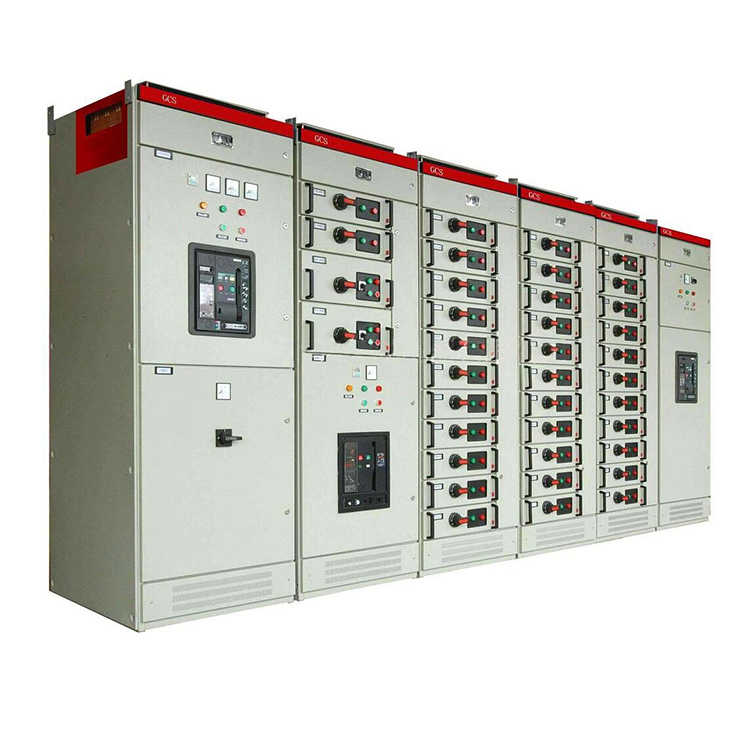
Table of Contents
- What Is GCS Low Voltage Switchgear?
- What Are the Main Structural Features of GCS Switchgear?
- Why Choose GCS Low Voltage Switchgear for Power Distribution?
- How Does GCS Compare with GCK Low Voltage Switchgear?
- Where Is GCS Low Voltage Switchgear Used?
- How Should Buyers Select GCS Low Voltage Switchgear?
- Why Does Manufacturer Capability Matter?
- Frequently Asked Questions About GCS Low Voltage Switchgear
What Is GCS Low Voltage Switchgear?
GCS Low Voltage Switchgear is a modular low-voltage power distribution and control solution designed for applications where multiple circuits, motor-control functions, automation interfaces, and maintenance access must be organized within a compact electrical assembly.
Compared with conventional low-voltage switchgear configurations, GCS equipment places greater emphasis on modular functional units and practical extraction and propulsion mechanisms. According to CONSO·CN's product information, its GCS solution can be manufactured according to a customer's single-line diagram, layout plan, and purchasing list, allowing the final configuration to better correspond with the actual distribution system.
The design is particularly useful when a project requires multiple outgoing feeders and independent functional units. Instead of treating the entire cabinet as one electrical space, GCS construction divides equipment into functional sections, helping operators isolate individual circuits and limit the potential influence of a localized fault.
What Are the Main Structural Features of GCS Switchgear?
The effectiveness of a GCS system comes from the relationship between its electrical components, busbar arrangement, functional compartments, cable compartments, and withdrawable units. Several structural characteristics are especially important when evaluating a GCS solution.
Modular Functional Units
Modular construction makes it possible to configure different circuits according to actual distribution requirements. This is valuable for industrial facilities where feeders, motor-control circuits, automation equipment, and auxiliary loads may need different electrical configurations.
Separated Functional Compartments
The functional units and compartments are designed with clear separation. This arrangement can help restrict the impact of a fault to a smaller area and allows maintenance personnel to work on individual sections without unnecessarily disturbing other circuits.
Three-Busbar Horizontal Arrangement
The product information from CONSO·CN specifies a three-bus horizontal arrangement intended to provide dynamic and thermal stability. The stated design can withstand the impact of short-circuit current up to 80/176 kA, depending on the applicable configuration and conditions.
High Circuit Density
A single MCC cabinet can accommodate up to 22 circuits according to the manufacturer's published product information. This configuration can be useful for power-generation, petrochemical, industrial automation, and other facilities with a large number of electrical loads.
Practical Cable Compartment
External cable connections are arranged within a dedicated cable compartment, with cable entry and exit possible from different directions depending on the configuration. The zero-sequence current transformer can also be positioned in the cable compartment, supporting easier installation and maintenance.
Extensive Secondary Connections
GCS drawer units can provide multiple secondary plug-in contacts. CONSO·CN states that units of 1 unit and above can have 32 pairs, while half-unit configurations can have 20 pairs. This capacity supports computer interfaces, automatic-control circuits, and other secondary-control requirements.
Why Choose GCS Low Voltage Switchgear for Power Distribution?
For industrial electrical systems, switchgear selection affects not only initial installation but also operation, troubleshooting, expansion, and maintenance. GCS technology offers several practical advantages.
| Feature | Practical Value | Typical Benefit |
|---|---|---|
| Modular functional units | Independent circuit organization | Easier configuration and maintenance |
| Withdrawable drawer design | Supports extraction and insertion of functional units | More convenient servicing |
| Separated compartments | Limits interaction between functional sections | Improved operational management |
| Three-bus horizontal arrangement | Supports dynamic and thermal stability | Suitable for demanding distribution environments |
| Dedicated cable compartment | Organizes external connections | Simplified installation and inspection |
| Multiple secondary contacts | Supports control and automation interfaces | Better compatibility with automated systems |
Another important advantage is design flexibility. GCS switchgear is not necessarily selected as a generic off-the-shelf cabinet. A professional manufacturer can configure the equipment according to electrical drawings, equipment layouts, and purchasing requirements. This approach is particularly valuable for projects where load distribution and cabinet configuration differ from standard arrangements.
How Does GCS Compare with GCK Low Voltage Switchgear?
GCS and GCK are both used in low-voltage distribution systems, but their structural approaches are not identical. CONSO·CN describes GCS as an advanced type compared with its GCK low-voltage switchgear, highlighting its greater modularity and more practical extraction and propulsion arrangement.
| Consideration | GCS | GCK |
|---|---|---|
| Modular design | Highly modular functional units | Modular configuration |
| Functional units | Strong emphasis on withdrawable units | Independent circuit inspection and maintenance |
| Automation interface | Multiple secondary plug-in contacts | Configuration depends on project requirements |
| Best selection approach | Complex distribution and automation requirements | Standardized or customized distribution applications |
The right choice should ultimately be based on system voltage, current, short-circuit requirements, circuit quantity, cabinet dimensions, control architecture, maintenance strategy, and applicable standards rather than simply choosing one model because it appears more advanced.
Where Is GCS Low Voltage Switchgear Used?
GCS systems are suitable for a broad range of industrial and infrastructure power-distribution environments. Their modular architecture is particularly valuable when a project contains numerous outgoing circuits or requires integration with automation systems.
- Power generation: Supports distribution and motor-control requirements associated with large generating units.
- Petrochemical facilities: Useful where numerous motors, pumps, control systems, and auxiliary loads require organized distribution.
- Industrial manufacturing: Helps manage multiple production lines and electrically powered machinery.
- Commercial and infrastructure facilities: Can be configured for centralized low-voltage distribution systems.
- Automation systems: Multiple secondary contacts can support computer interfaces and automatic-control circuits.
- Large electrical distribution projects: Modular cabinets can be configured according to the project's single-line diagram and equipment layout.
For large facilities, the ability to organize multiple feeders within a coordinated switchgear lineup can improve the overall maintainability of the distribution architecture.
How Should Buyers Select GCS Low Voltage Switchgear?
Purchasing a GCS cabinet should begin with the electrical system rather than the cabinet itself. A qualified supplier should receive enough technical information to determine the appropriate configuration.
- Confirm the electrical parameters. Define rated voltage, rated current, frequency, short-circuit requirements, and other project-specific parameters.
- Prepare the single-line diagram. This provides the supplier with a clear understanding of incoming and outgoing circuits.
- Determine circuit quantity. Consider feeders, motor-control circuits, auxiliary circuits, and future expansion requirements.
- Evaluate the physical layout. Cabinet dimensions, cable direction, installation space, and maintenance clearance should be considered.
- Specify control requirements. Automation, monitoring, computer interfaces, and secondary circuits should be defined before production.
- Check protection coordination. Circuit breakers and current-limiting components should be selected according to the actual distribution system.
- Review testing and documentation. Buyers should request appropriate technical drawings, test documentation, component lists, and operating information.
For customized projects, providing the supplier with a complete single-line drawing, layout plan, and purchasing list can significantly improve communication and reduce configuration errors. CONSO·CN specifically identifies these documents as part of its GCS production process.
Why Does Manufacturer Capability Matter?
A low-voltage switchgear cabinet is a coordinated electrical assembly rather than a simple metal enclosure. The quality of busbar construction, wiring, functional-unit assembly, component selection, mechanical alignment, and testing can all influence the final system's reliability.
When selecting a China GCS Low Voltage Switchgear manufacturer or supplier, buyers should evaluate more than price. Key factors include:
- Experience in low-voltage switchgear manufacturing
- Ability to interpret single-line diagrams and project drawings
- Customization and engineering capabilities
- Quality-control procedures during assembly
- Factory testing and inspection capability
- Availability of technical documentation
- After-sales technical support
- Ability to coordinate switchgear with the wider distribution system
CONSO·CN presents GCS as part of its broader low-voltage switchgear portfolio, alongside GCK, MNS, and GGD solutions. Its product information also emphasizes customized production based on customer drawings and distribution requirements.
For buyers comparing suppliers, the low voltage switchgear product range can provide useful context when determining which cabinet architecture is most appropriate for a particular project.
Frequently Asked Questions About GCS Low Voltage Switchgear
What is the main purpose of GCS Low Voltage Switchgear?
Its primary purpose is to distribute, control, protect, and manage low-voltage electrical circuits. Its modular architecture is particularly suitable for systems requiring multiple feeders, functional units, and automation interfaces.
What makes GCS different from conventional low-voltage switchgear?
GCS emphasizes modular functional units, withdrawable drawer mechanisms, compartmentalized construction, flexible cable arrangements, and extensive secondary plug-in connections. These features can make complex distribution systems easier to configure and maintain.
Can GCS switchgear be customized?
Yes. According to CONSO·CN, GCS switchgear can be produced according to the customer's single-line drawing, layout plan, and purchasing list.
How many circuits can an MCC cabinet accommodate?
The manufacturer's published information states that a single MCC cabinet can accommodate up to 22 circuits. Actual capacity should be confirmed according to the specific electrical configuration and cabinet arrangement.
Is GCS suitable for automated industrial systems?
Yes. The available secondary plug-in contacts are designed to support computer interfaces and automatic-control circuits, making the configuration suitable for industrial automation applications where extensive control wiring is required.
Conclusion: Is GCS Low Voltage Switchgear the Right Choice for Your Project?
GCS Low Voltage Switchgear combines modular distribution architecture, separated functional compartments, practical withdrawable units, organized cable connections, and extensive secondary interfaces to address the requirements of modern industrial power systems. For projects involving multiple circuits, automation, motor control, and customized distribution layouts, selecting the right manufacturer is just as important as selecting the switchgear type. If you are evaluating a GCS solution for an industrial, commercial, or infrastructure project, contact us with your single-line diagram, layout plan, and technical requirements to discuss a suitable configuration with CONSO·CN.