- English
- Español
- Português
- русский
- Français
- 日本語
- Deutsch
- tiếng Việt
- Italiano
- Nederlands
- ภาษาไทย
- Polski
- 한국어
- Svenska
- magyar
- Malay
- বাংলা ভাষার
- Dansk
- Suomi
- हिन्दी
- Pilipino
- Türkçe
- Gaeilge
- العربية
- Indonesia
- Norsk
- تمل
- český
- ελληνικά
- український
- Javanese
- فارسی
- தமிழ்
- తెలుగు
- नेपाली
- Burmese
- български
- ລາວ
- Latine
- Қазақша
- Euskal
- Azərbaycan
- Slovenský jazyk
- Македонски
- Lietuvos
- Eesti Keel
- Română
- Slovenski
- मराठी
- Srpski језик

How Can the Right Electrical Transformer Solve Power Stability Problems?
Abstract
Choosing an Electrical Transformer is not simply about matching voltage and capacity. Buyers often face hidden risks such as unstable output, overheating, insulation failure, poor adaptation to the installation environment, and costly downtime after commissioning. This article explains how to evaluate transformer types, performance priorities, installation conditions, and supplier support before making a decision. It also shows how a practical manufacturer mindset can reduce technical uncertainty, improve operating reliability, and help users select a transformer that fits real project demands instead of only looking good on paper.
Table of Contents
- Outline
- Why Do Buyers Struggle with Transformer Selection?
- What Does an Electrical Transformer Actually Need to Do?
- Which Transformer Type Fits Different Applications?
- How Should You Compare Specifications Beyond the Nameplate?
- What Mistakes Create Extra Cost After Purchase?
- Why Does the Supplier Matter as Much as the Product?
- Which Factors Should Be Reviewed Before Ordering?
- FAQ
- Conclusion
Outline
- The most common buyer concerns behind transformer inquiries
- The real job of an Electrical Transformer in daily operation
- How different transformer types match different project conditions
- What technical details deserve closer attention before purchase
- How poor selection leads to higher long-term cost
- Why engineering support and manufacturing discipline matter
- A simple checklist for narrowing down the right option
Why Do Buyers Struggle with Transformer Selection?
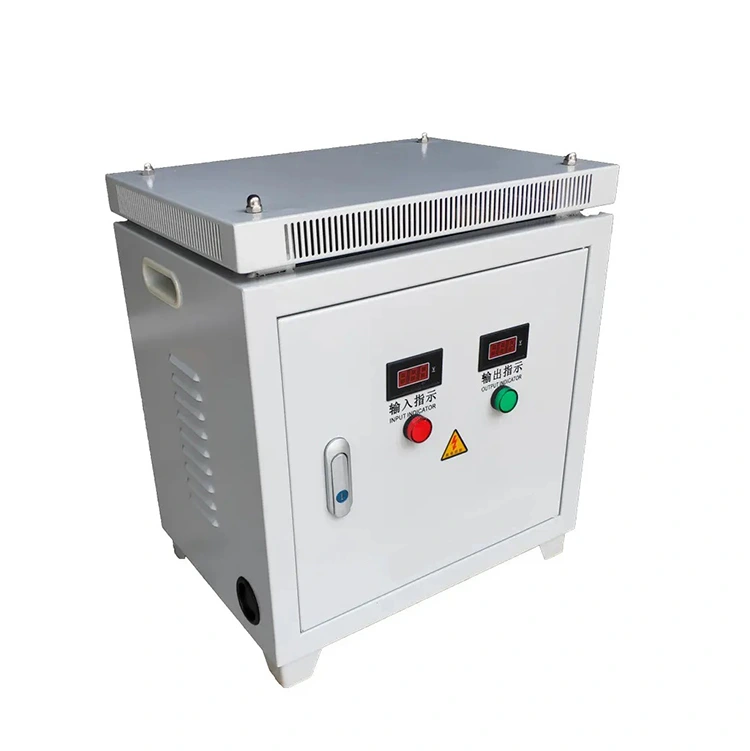
Many transformer purchases begin with a simple request: “We need a unit for this voltage, this capacity, and this site.” But once the discussion starts, the real questions appear. Will the transformer run continuously under heavy load? Can it handle local temperature changes? Is the installation area compact, dusty, humid, or exposed to outdoor weather? Will the project need low maintenance, fast delivery, or custom wiring arrangements?
That is why buying an Electrical Transformer often feels more complicated than expected. The challenge is not only technical. It is also operational. A wrong choice may still energize the system, yet create long-term trouble through heat buildup, efficiency loss, noise, premature aging, or difficult maintenance access.
In practical projects, customers usually care about five things at the same time:
- Reliable voltage conversion without unstable performance
- Safe operation in the actual installation environment
- Low failure rate during long-term service
- Reasonable delivery and customization flexibility
- Clear technical communication before and after purchase
A strong purchasing decision should answer all five, not just the first one.
What Does an Electrical Transformer Actually Need to Do?
At a basic level, an Electrical Transformer transfers electrical energy between circuits and adjusts voltage to suit the system. But for the buyer, that description is too narrow. In the field, the transformer also acts as a protection point, a stability tool, and an efficiency factor inside the wider power system.
A well-matched transformer should do more than convert voltage. It should help equipment start properly, support stable operation under changing loads, reduce unnecessary losses, and remain dependable in the face of temperature rise, installation stress, and usage variation.
| Operational Need | Why It Matters | What Buyers Should Check |
|---|---|---|
| Voltage matching | Protects downstream equipment from mismatch and instability | Primary and secondary voltage, tap range, phase requirement |
| Load handling | Prevents overheating and unexpected trips | Rated capacity, load profile, peak demand, future expansion |
| Thermal performance | Affects insulation life and long-term reliability | Cooling method, temperature rise, ventilation conditions |
| Insulation reliability | Supports operational safety in harsh environments | Insulation class, altitude, humidity, pollution level |
| Maintenance practicality | Reduces service interruption and operating cost | Access layout, service interval, spare parts support |
When buyers frame the discussion around these real operating needs, the selection process becomes far more accurate.
Which Transformer Type Fits Different Applications?
Not every project needs the same transformer design. Different installation environments and service expectations lead to different choices. This is where manufacturers such as Conso Electrical Science and Technology Co., Ltd. often become relevant to buyers, because projects may require options across oil-immersed, dry-type, pad-mounted, power, distribution, or pole-mounted transformer categories rather than a one-size-fits-all answer. :contentReference[oaicite:1]{index=1}
The right Electrical Transformer should be selected according to application logic, not habit.
| Transformer Type | Typical Advantage | Suitable Scenario |
|---|---|---|
| Oil-immersed transformer | Strong cooling performance and broad capacity range | Outdoor distribution systems, industrial facilities, utility projects |
| Dry-type transformer | Cleaner indoor use and lower fire-related concerns in many settings | Commercial buildings, workshops, indoor substations |
| Pad-mounted transformer | Compact enclosed structure for public-facing installations | Residential developments, urban distribution areas |
| Distribution transformer | Daily voltage reduction for local power delivery | Factories, buildings, community networks |
| Power transformer | Designed for larger transmission or substation duty | Grid systems, heavy industrial projects, utility infrastructure |
| Pole-mounted transformer | Space-efficient installation on overhead networks | Rural lines, roadside supply points, light distribution networks |
The key is not to ask which type is “best” in the abstract. The better question is which type will be easiest to operate safely and economically in your specific project.
How Should You Compare Specifications Beyond the Nameplate?
A specification sheet can look complete while still leaving serious gaps. Buyers sometimes compare only capacity, voltage, and price. That approach is tempting, but it can hide problems that emerge during installation or commissioning.
When reviewing an Electrical Transformer, it helps to go one level deeper and ask:
- Is the load continuous, fluctuating, or highly intermittent?
- Will the unit operate indoors or outdoors?
- Does the project require compact dimensions or special enclosure protection?
- Are there local grid fluctuations that demand tapping flexibility?
- Will the unit face dust, salt spray, humidity, altitude, or poor ventilation?
- Does the end user need custom terminals, drawings, or branding support?
These questions reveal whether a transformer is merely available or truly suitable.
Practical buying tip
- Do not select capacity based only on present load if expansion is likely
- Do not ignore cooling conditions at the final installation site
- Do not assume identical voltage ratings mean identical design quality
- Do not treat test documentation as optional for project-based orders
A well-prepared supplier should be able to discuss design details in plain language, confirm the operating assumptions, and convert technical requirements into clear documentation before production begins.
What Mistakes Create Extra Cost After Purchase?
The most expensive transformer is often not the one with the highest quoted price. It is the one that forces unplanned cost after delivery. That can include on-site modification, lost production time, repeated maintenance, or early replacement.
Some of the most common mistakes include:
- Choosing too little capacity to save initial budget
- Ignoring ambient temperature and ventilation limitations
- Overlooking installation space and cable entry direction
- Failing to confirm standards, test expectations, and protection requirements
- Selecting on price alone without reviewing supplier responsiveness
These issues may look small during procurement, but they grow larger after energization. A transformer that runs hot, hums excessively, or struggles with real operating conditions quickly turns into a management problem.
That is why smart buyers evaluate the total cost of ownership. A dependable Electrical Transformer should support stable operation over time, not simply pass a short-term comparison spreadsheet.
Why Does the Supplier Matter as Much as the Product?
Buyers do not only purchase a transformer. They also purchase the supplier’s discipline. Manufacturing consistency, material control, test practice, engineering communication, and after-sales support all influence the real outcome of the project.
In transformer projects, this matters because customers often need more than a catalog item. They may need design confirmation, document alignment, customization, production scheduling, or technical clarification between the contractor, distributor, and end user.
A capable manufacturer should be ready to support that process with:
- Clear communication during specification review
- Stable quality control from raw materials to final testing
- Customization based on actual usage conditions
- Drawings and technical documents that match the final agreement
- Realistic lead time planning instead of vague promises
This is where buyers often look for companies with established transformer manufacturing experience and a product line broad enough to match different project needs. Conso Electrical Science and Technology Co., Ltd. presents its transformer business around multiple application categories and customized supply capability, which reflects the kind of flexibility many project buyers are actually looking for.
Which Factors Should Be Reviewed Before Ordering?
Before placing an order, it is worth running through a final decision checklist. This prevents the purchase from being guided by only one factor, such as unit price or fast availability.
| Review Item | Key Question | Why It Protects the Buyer |
|---|---|---|
| Electrical parameters | Do voltage, frequency, phase, and capacity fully match the project? | Prevents immediate compatibility issues |
| Environmental fit | Can the transformer handle the actual site conditions? | Reduces thermal stress and insulation risk |
| Structural design | Will installation, cable access, and maintenance be practical? | Avoids costly site adjustment |
| Documentation | Are drawings, tests, and technical terms confirmed before production? | Limits misunderstanding and rework |
| Supplier support | Can the supplier answer project-specific questions quickly and clearly? | Improves confidence throughout delivery and commissioning |
| Long-term value | Will this choice remain stable as load and operating pressure change? | Supports lower lifetime operating cost |
If a supplier can help you complete this review with confidence, the purchasing process becomes less risky and much more efficient.
FAQ
Q1: How do I know what size Electrical Transformer I need?
Start with load demand, voltage requirement, phase type, and future expansion expectations. Do not size the transformer only for today’s minimum load if the project may grow.
Q2: Which is better for indoor use, oil-immersed or dry-type?
It depends on the site and operating priorities. Many indoor projects prefer dry-type units for practical installation reasons, while other applications still benefit from oil-immersed designs when cooling performance and system demands require them.
Q3: Why is overheating such a common concern?
Excess heat shortens insulation life, affects stability, and raises failure risk. Poor ventilation, overload, or an unsuitable design can all contribute to overheating.
Q4: Is a lower price always a better purchasing result?
Not necessarily. A cheaper transformer may create higher cost later through downtime, maintenance, energy loss, or installation complications.
Q5: What should I ask a transformer supplier before ordering?
Ask about design confirmation, testing, customization options, lead time, documentation, service support, and experience with similar application conditions.
How Can You Make a More Confident Transformer Decision?
The best transformer decision comes from matching product design to actual operating conditions, not from chasing the shortest quotation sheet. A reliable Electrical Transformer should support stable voltage conversion, practical installation, long service life, and manageable maintenance. That means buyers should compare not only the technical rating, but also environmental fit, engineering clarity, and supplier responsiveness.
When a project demands dependable transformer solutions, working with an experienced manufacturer can remove a great deal of uncertainty from the process. If you are reviewing options for your next power distribution or industrial application, Conso Electrical Science and Technology Co., Ltd. can help you evaluate the right configuration for your project conditions, performance targets, and delivery expectations.
Ready to narrow down the right transformer for your application? Share your voltage, capacity, installation environment, and project requirements with our team, and we will help you identify a practical solution with clear technical support. Contact us today to discuss your transformer needs in detail.
Previous:No News